Long before local grocery stores fill with shoppers, as darkness lingers over empty parking lots and quiet buildings, Second Harvest of Silicon Valley’s food rescue managers are already behind the scenes. Past swinging plastic curtains and humming refrigerators, they check in with store employees and nonprofit partners, observe how food is sorted and stored, and help keep nutritious food moving safely and efficiently into the community.
They’re there because grocery rescue is more complicated than it might seem.
At its simplest, grocery rescue means keeping good food from going to waste and making it available to neighbors across our community. But doing that safely and reliably across Silicon Valley takes much more than moving food from one place to another. It takes careful coordination, food safety expertise, strong relationships and the ability to solve problems quickly when plans change.
As the largest food rescue organization in Silicon Valley, Second Harvest has built a food rescue network that operates at significant scale. In fiscal year 2026, 73% of the food we distributed was rescued from farms and retailers.
Grocery rescue is an important part of that work. Last year, our program brought together 117 nonprofit partners and 237 retail stores to coordinate an average of 875 pickups each week, redirecting nearly 18 million pounds of food from going to waste. According to the ReFED Insights Engine Impact Calculator, rescuing that food also prevented an estimated 28,000 metric tons of carbon dioxide emissions and saved more than 1 billion gallons of water.
Here’s what it takes to keep all that good food moving.
Grocery rescue starts with a strong foundation
Food rescue has been part of Second Harvest’s work from the beginning. In 1980, one of our earliest food mobilizers — staff tasked with expanding our food program — described a simple idea: Instead of letting surplus food go to waste, connect it with people who can use it.
The idea is still at the heart of our work. The system behind it has become much more sophisticated. Over the years, Second Harvest has worked closely with grocery partners to improve how donations are sorted, stored and prepared for pickup. Clear procedures help protect food quality, make pickups more efficient and ensure everyone understands what can — and should — be donated.

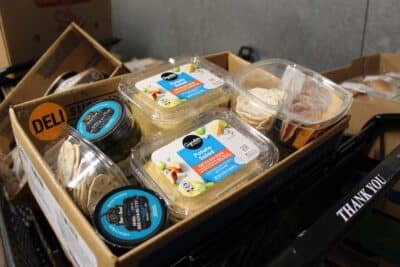
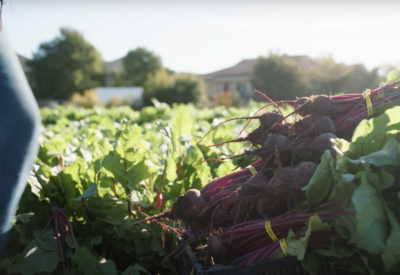
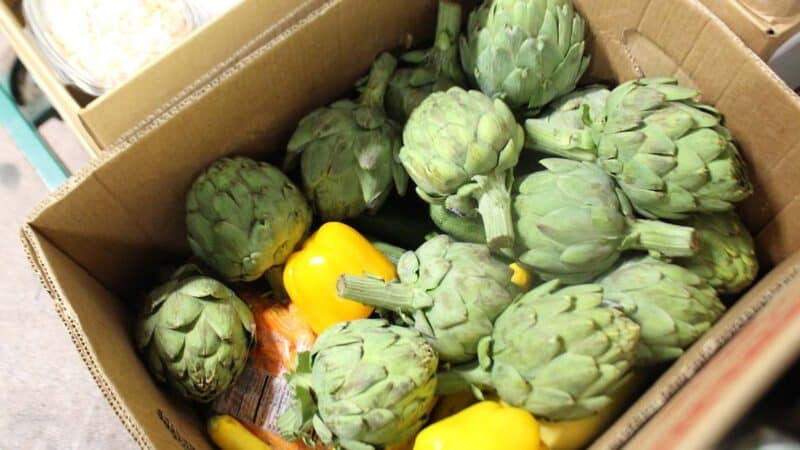
Today, grocery rescue includes fresh produce, meat, dairy, eggs, prepared foods and other groceries that can no longer be sold but are still safe to eat.
Before the first pickup at a new location, our food rescue team helps put the pieces in place to make sure food can move safely and reliably.
That includes connecting a participating retailer with a nearby nonprofit partner, establishing a pickup schedule and making sure partners have the right equipment and food safety training. Retail employees also receive training and ongoing support to help identify food that can be donated and ensure it is handled and stored appropriately.
The work continues long after that first pickup.
“What we do is not a one and done deal,” says Melissa Gaherty, food sourcing manager at Second Harvest. “We must keep going back and repeating information and working with many different staff members to see results.”
For nonprofit partners, grocery rescue can also expand the variety of fresh foods available at local distributions.
“Before partnering with Second Harvest, it was just canned goods and dry goods for our families,” says Kelly, a volunteer site manager for a church distribution in San Jose. “We didn’t have the resources. You provide the food we need in order to help people.”
Second Harvest provides food to nonprofit partners at no cost, allowing organizations to direct more of their resources toward the work they know best. By removing the cost barrier, we are able to work with community partners of all sizes to ensure as many people as possible have access to nutritious food.
Keeping food moving takes constant coordination
For large scale grocery rescue donations, our team carefully determines the routes, drivers and trucks needed to move pallets of food each day. “We communicate both with our transportation team and our agency partners on a daily basis regarding pickups,” says Gaherty.
Even the best-planned grocery rescue pickup can change quickly.
Traffic can delay a volunteer. A store can have more food available than expected. A truck may not have enough room for an unusually large donation. A scheduled driver can become unavailable.
“I’ll get a call from a retail store saying, ‘I have stacks and stacks of donations in our small back area. These have to go,’” says Gaherty.
When that happens, there’s often a limited window to find another solution.
Gaherty regularly communicates with both retailers and nonprofit partners when plans change, helping everyone understand what is happening and how a pickup can get back on track.
Grocery rescue managers have to understand transportation, store operations, nonprofit partner capacity and food safety — and then figure out how those pieces can come together when something unexpected happens.
That problem-solving helps prevent a missed pickup from becoming food waste. Every successful pickup reflects years of collaboration, operational expertise and continuous improvement. It’s one reason Second Harvest has become Silicon Valley’s leading food rescue organization, recovering millions of pounds of nutritious food each year and connecting it with neighbors across Silicon Valley.
Relationships help rescue more good food
The logistics are important, but grocery rescue also depends on something less visible: trust.
Second Harvest’s food rescue managers spend time in stores getting to know employees, observing pickups and understanding how grocery rescue fits into already-busy retail operations.
“I do find that breaking down barriers and fostering a good relationship changes how food donors respond to the program,” Gaherty says. “When they can put a face to your name and have an honest conversation, they will be open to understanding that this program is not just extra work on their already full plate, it is a community effort and benefit.”
Those relationships can lead to more food being rescued.
At one participating store, Gaherty saw an opportunity to increase donations. The store was navigating staffing changes and donating food from only one or two product categories.
For about three months, Gaherty worked alongside store employees to better understand their processes and challenges. She visited regularly, observed pickups and looked with staff at food being set aside in the store’s divert bins to identify additional opportunities for donation.
Over time, the store expanded the categories of food it donated and increased its pickup schedule. The result: Donations nearly tripled.
The increase didn’t come from a new piece of technology or a single process change. It came from showing up, listening, sharing expertise and working together to find solutions that made sense for that particular store.

Food safety is part of every pickup
Moving more food only matters if it can be done safely.
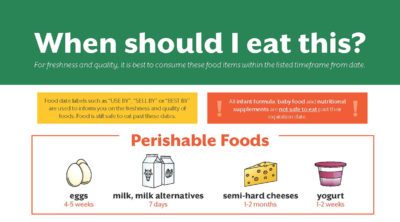
Grocery rescue involves highly perishable foods, including meat, dairy, eggs and prepared foods, making food safety an essential part of the program.
Second Harvest provides food safety training and ongoing guidance to nonprofit partners and participating retailers. Partners also receive equipment needed to transport food safely, and our food rescue team continues to provide support as staffing, schedules and circumstances change.
These practices help ensure food is handled properly throughout its journey from a grocery store to a local distribution.
They also make it possible to rescue a much wider variety of nutritious food than many people might associate with food donation.
What Grocery Rescue at Scale Really Takes
From the outside, a grocery rescue pickup can look simple: Food leaves a grocery store and makes its way to a local nonprofit partner.
Behind that pickup is a much bigger system.
It’s the store employee who knows which products can be donated. The nonprofit partner who arrives on schedule with the right equipment. The food rescue manager who helps train both teams, builds relationships and steps in when something unexpected happens.
And it’s hundreds of stores and nonprofit partners repeating that process week after week across Santa Clara and San Mateo counties.
That network of relationships, logistics, training, food safety practices and problem-solving allows Second Harvest to rescue millions of pounds of good food each year while increasing access to fresh, nutritious food throughout our community.
Every pickup is one small part of that larger system — and proof of what’s possible when our community works together to make the most of good food.
By supporting Second Harvest, you help keep that system moving and nutritious food within reach for neighbors throughout Silicon Valley.