


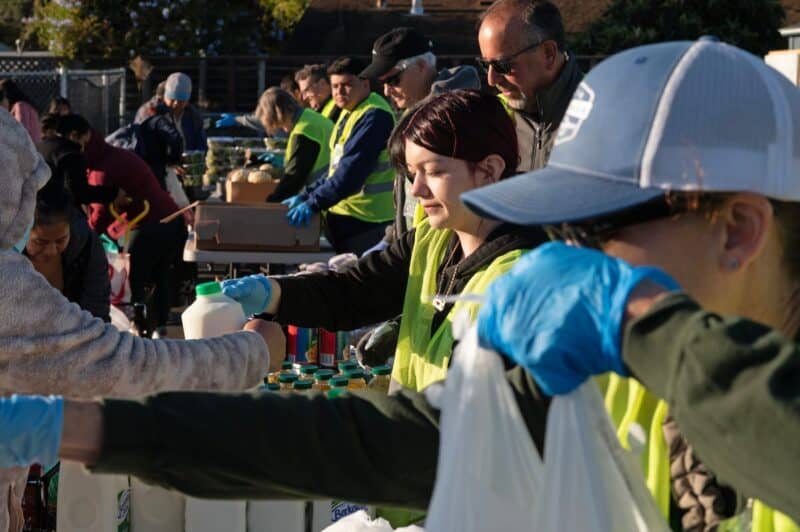
In Santa Clara and San Mateo counties, 1 in 6 residents turns to Second Harvest for nutritious food each month
- The holiday season is a critical fundraising period for Second Harvest. Most of its annual donations come in during this time and help provide nutritious groceries to neighbors year-round.
- Second Harvest sources and distributes more than 2 million pounds of food a week across the two counties.
- A $1 donation helps provide enough food for two nutritious meals.
SAN JOSE, Calif., November 23, 2026 — Second Harvest of Silicon Valley is asking the community to help raise $32 million by the end of December to ensure local families have access to nutritious groceries throughout the coming year.
Today, 1 in 6 people in Santa Clara and San Mateo counties turns to Second Harvest for food each month as the high cost of gas, housing, groceries and utilities continues to strain household budgets. For neighbors already struggling to make ends meet, changes to federal food assistance and health care programs could mean less support at a time when they can least afford it.
In a recent Second Harvest client survey, 86% of respondents said that in the past six months, they had worried about running out of food before they had enough money to buy more. Nearly half (47%) reported having less than $100 in savings, leaving little room for unexpected expenses.
“Here in Silicon Valley, parents are doing everything they can to provide for their families. Some are working more than one job and still worry their paycheck won’t stretch far enough to cover groceries,” said Leslie Bacho, CEO of Second Harvest of Silicon Valley. “No parent should have to open the refrigerator and wonder if there’s enough for dinner. When neighbors give during the holidays, they help families keep nutritious food on the table all year.”
High living costs strain family budgets
For Martha, a Redwood City mother of two, making groceries last means planning meals carefully. She cooks for herself and her children, freezes portions for the week and saves leftover rice to make another dish. When she shared her story with Second Harvest, she was preparing to take on even more hours at work.
“I’ll be working about 50 to 60 hours a week to make ends meet and it’s still not enough,” Martha said.
For households with little savings, even a small increase in expenses or reduction in benefits can show up quickly in the grocery budget. Since June, changes to CalFresh, California’s Supplemental Nutrition Assistance Program (SNAP), have made eligibility rules more complex. Additional paperwork and bureaucracy can make it harder for families to keep their grocery benefits, even when they still qualify.
Changes to Medi-Cal, California’s Medicaid program, could put additional financial pressure on some households. For families with little savings, a gap in health coverage could mean an unexpected medical bill and less money for groceries.
Food banks can supplement the federal nutrition safety net, but they cannot replace the grocery dollars families lose. One way Second Harvest helps is by making nutritious food available at places neighbors already go.
Keeping nutritious groceries close to home
Every week, Second Harvest sources and distributes more than 2 million pounds of food through a network of about 350 community organizations at more than 650 locations across Santa Clara and San Mateo counties. Together, they make fresh produce, milk, eggs and staples like rice, beans and bread available at schools, community centers, college campuses and neighborhood pantries.
One of those partners is Our Lady Star of the Sea in Alviso, the church where 70-year-old Moses picks up groceries and where his father once volunteered. Moses and his sister care for their 96-year-old mother and 93-year-old father. He brings home the groceries, and she prepares meals for their parents.
“It’s hard to live here in Silicon Valley. Second Harvest helps out a lot,” Moses said.
Financial gifts from the community help Second Harvest bring nutritious groceries to neighborhood distributions. That support helps Second Harvest collect surplus produce from growers and donated groceries from retailers, buy staples like milk and eggs in bulk and deliver food to local partners. In fiscal year 2026, community support helped Second Harvest buy more food so families could bring home more groceries and choose from a wider variety of nutritious foods.
Getting those groceries to local partners has also become more expensive for the food bank. From March to late October, the price Second Harvest paid for fuel rose 45%. By late October, it was spending nearly $77,000 a month on diesel alone to keep its 30 trucks on the road.
“Our goal is to raise $32 million by the end of December. We receive the majority of our donations during the holidays, so what we raise in these weeks shapes how much food we can source and deliver throughout the year,” said Shobana Gubbi, chief philanthropy officer at Second Harvest of Silicon Valley. “Every gift this holiday season helps put nutritious food on the table for neighbors across Santa Clara and San Mateo counties, throughout the holidays and all year long.”
Help Second Harvest reach its $32 million holiday goal
On average, about 95% of Second Harvest’s funding comes from the community. Donate this holiday season to help keep nutritious groceries available to neighbors in Santa Clara and San Mateo counties all year. A $1 donation helps provide enough food for two nutritious meals.
- Individuals and families can make a one-time or monthly donation and check whether their employer will match their gift.
- Businesses can make a corporate contribution, organize a workplace fundraiser or match employee donations through a partnership with Second Harvest.
Find groceries. Neighbors in Santa Clara and San Mateo counties can find a nearby grocery distribution or call Second Harvest’s multilingual Food Connection hotline at 1-800-984-3663 for help finding food or applying for CalFresh.
About Second Harvest of Silicon Valley
Founded in 1974, Second Harvest of Silicon Valley is one of the largest food banks in the nation and a trusted nonprofit leader in ending local hunger. The organization partners with about 350 community organizations to distribute nutritious food at more than 650 locations across Santa Clara and San Mateo counties. Each month, Second Harvest serves 1 in 6 people in the two counties, half of whom are children and seniors. Second Harvest also connects people to federal nutrition programs and other food resources and advocates for anti-hunger policies at the local, state and national levels. Learn more at shfb.org.
Media contacts. For interview requests, photography or B-roll, contact Michelle Denny or Diane Baker Hayward.
Visit our Newsroom