Nourishment is fundamental to good health not just in the short term; it contributes to better mental and physical health in the long run as well. Food insecurity has a negative effect on physical, mental and emotional health and is associated with increased risk for chronic health conditions like diabetes, obesity, heart disease, mental health disorders and other diseases.
Knowing that food is medicine, in 2009, Second Harvest of Silicon Valley began developing partnerships with medical providers to address the vital link between nutrition and health. Kelly Chew, Second Harvest’s director of services says, “We recognized that food insecurity often goes hand in hand with poor health outcomes. This holistic approach allows us to tackle both hunger and health issues more effectively, ultimately creating a stronger, healthier community.”
Second Harvest has developed partnerships with medical partners across Santa Clara and San Mateo counties, including Kaiser Permanente, Santa Clara Valley Medical Center – Hospital and Clinics, San Mateo Medical Center, Stanford Health Care and Stanford Medicine Children’s Health. We help partners incorporate food insecurity screening into standard patient intake procedures and connect individuals to resources when they screen positive. This is filling an important need for healthcare providers.
“As we started gathering data about the needs of our patients, food and connections to food was one of the things that most commonly showed up,” explained Mariana Becerra, enhanced care management/community supports program supervisor at Gardner Health Services, which provides comprehensive medical and mental healthcare to patients in Santa Clara and San Mateo counties. “We started looking into ways to connect our patients to food and began working with Second Harvest. It’s been really helpful.”
Expanding access to nutritious food
These food bank and healthcare partnerships reduce barriers for patients to access food assistance and also:
- enable more patients to be connected to short- and long-term nutrition assistance programs like CalFresh and other programs;
- increase provider capacity to work food insecurity relief strategies into patient treatment plans; and
- ultimately, help prevent the onset of diet-related health conditions.
“One of the most important things we focus on in our program is to help patients that have chronic conditions like diabetes and making sure we’re able to help them lower their A1C,” said Becerra. “We can provide so much health education but if there’s no access to healthy food, then there’s only so much we can do. That’s why I feel like food is the biggest part of getting somebody healthy.”
Accelerating patient access to nutritious food
We utilize a four-step process to screen, refer, and quickly connect patients at risk for food insecurity with nutritious food and other resources when appropriate:


Empowering our community through medical partnerships
Our healthcare partnerships empower people in our community by making it easier for them to access support, speak openly about their needs and take steps toward better health. When trusted healthcare providers connect patients with nutritious food, they help ensure that families do not have to navigate food insecurity alone.
“This [access to food] is so critical,” shared one provider. “I often hear myself telling patients, ‘Take this with the largest meal of the day,’ and meanwhile they are thinking about their lack of food. It makes all the difference.”
For one patient, simply being asked about how food made it possible to receive support: “Thank you so much for asking me,” said a patient. “I didn’t know how or think to tell you I didn’t have enough. I am so grateful.”
Helping thousands of local patients
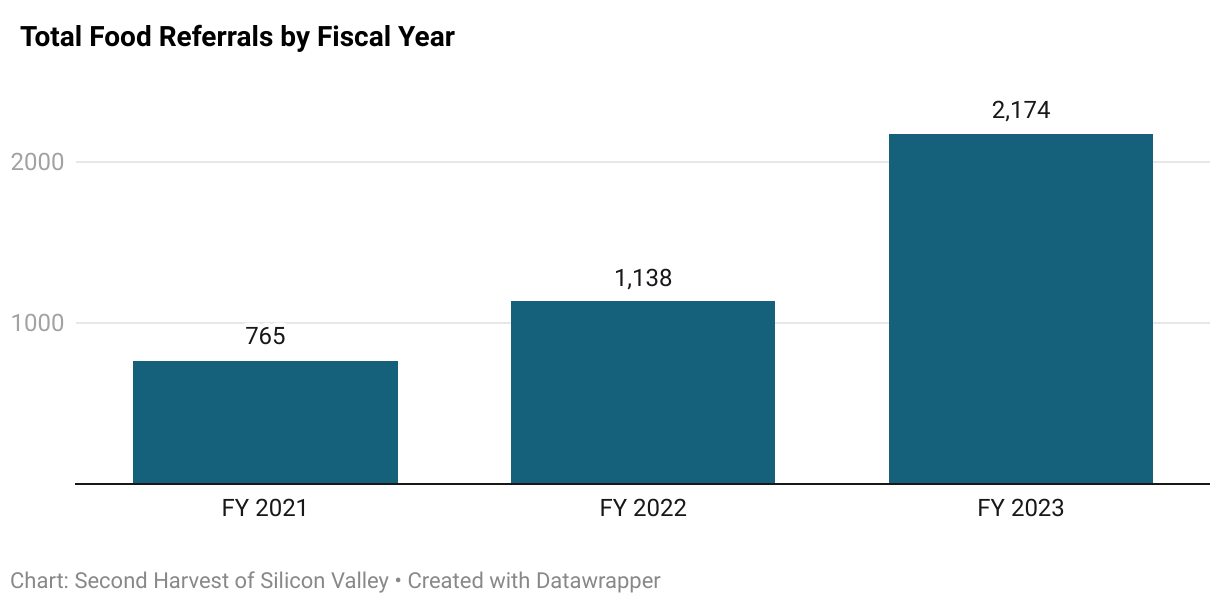
Second Harvest’s medical partnerships have identified and helped thousands of patients who may be food insecure. In fiscal year 2021, providers referred 765 patients to Second Harvest, and, by fiscal year 2026, that number had grown to 3,079 patients.
“I was at first very uncomfortable but then the doctor explained why it is important to get healthy food for medical reasons and they really made sense to me,” said another patient. “I was not uncomfortable anymore.”
A provider shared that, “someone screened positive for depression but when I talked to them, they were just hungry. If I wouldn’t have learned to ask about food, I would have just sent them to the therapist.”
Expanding our reach to serve more neighbors needing food assistance
Through our partnerships with healthcare providers, Second Harvest is able to connect with neighbors who may be facing challenges that affect their health and well-being — including the ability to consistently access nutritious food. These partnerships help us reach households with children, seniors and others who may benefit from additional support, while making it easier for patients to access resources through a trusted connection.
“It’s been a really useful tool to have, that easy connection into Second Harvest,” said Becerra. “To be able to submit the referrals and then help the patients. It’s been very helpful.”
“Our medical partnership program is enhancing community health by fostering collaboration between healthcare providers and community members,” said Chew. “Access to healthy food is a key part of our strategy, helping to prevent and manage chronic diseases. By improving access to nutritious food, we’re building a healthier, more resilient community.”