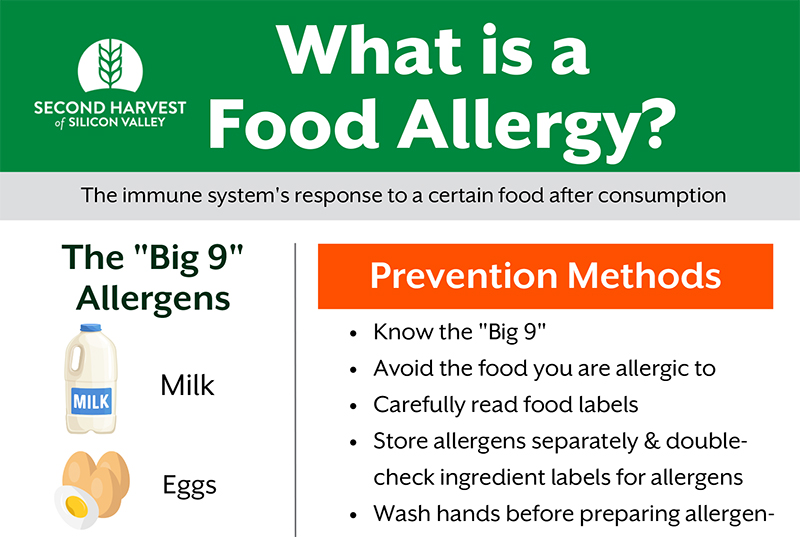
Food allergies can develop through eating, touching or inhaling specific foods that can trigger an immune response. In some people, a food allergy can cause severe symptoms or even a life-threatening reaction.
This guide outlines key information on food allergies, including the most common allergens, common symptoms, prevention methods, and how to respond in an emergency.
The “Big 9” Common Food Allergens
The most frequent food allergens in the U.S. are referred to as the “Big 9.” These account for the majority of food allergy reactions:
|
|
Prevention Tips for Food Allergies
If you or someone in your household has a food allergy, take these steps to reduce the risk of a reaction:
- Know the “Big 9” Allergens.
- Avoid foods that can cause an allergic reaction.
- Read food labels carefully, even on familiar products.
- Store and label food allergens separately.
- Wash hands thoroughly after handling a food allergen and before preparing allergen-free meals.
- Prevent cross-contact!
Common Symptoms of Food Allergies
Allergic reactions can vary from mild to severe. Symptoms may include:
- Tingling or itching in the mouth
- Hives, itching or eczema
- Swelling of the lips, face, tongue, and throat or other parts of the body
- Belly pain, diarrhea, nausea or vomiting
- Wheezing, nasal congestion or trouble breathing
In Case of an Emergency
- Have an EpiPen or other auto-injector on hand to treat severe allergic reactions, such as anaphylaxis.
- Seek emergency treatment if anaphylaxis symptoms develop (difficulty breathing, severe drop in blood pressure, rapid pulse, dizziness or lightheadedness).