


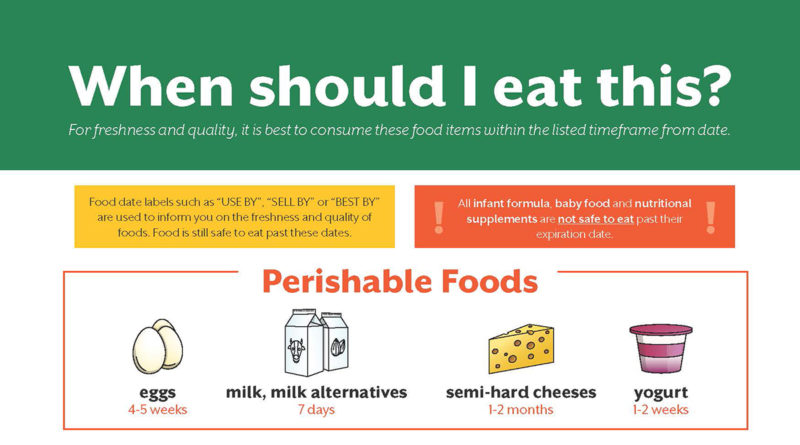
Do you ever wonder what “Use By” or “Best By” dates really mean? Knowing how to read food labels and understanding proper storage times can help you reduce food waste, save money, and keep your family safe.
This guide from Second Harvest of Silicon Valley will help you decipher food date labels and provides recommended timelines for eating or storing various foods.
What Do Food Date Labels Mean?
- Use By, Sell By, Best By, oh my: These dates are about freshness and quality—not safety. Most foods are still safe to eat after these dates except for:
- Infant formula
- Baby food
- Nutritional supplements
Recommended Storage Times for Common Foods
Dry and Canned Foods
- Dry Beans – 1–2 years
- Bread – 7 days (or up to 6 months if frozen)
- Tortillas – 3–4 weeks
- Brown Rice – 12 months
- White Rice – 2 years
- Pasta – 2–3 years
- Cereal, Oatmeal – 6–12 months
- High-Acid Canned Foods (e.g., tomatoes, citrus fruits) – 12–18 months
- Low-Acid Canned Foods (e.g., meats, vegetables) – 2–3 years
- Oil – 1 year
Perishable Foods
- Eggs – 4–5 weeks
- Milk and Milk Alternatives – 7 days
- Yogurt – 1–2 weeks
- Semi-Hard Cheeses (e.g., cheddar, Swiss) – 1–2 months
Frozen Meats
- Lunch Meat – 2 months
- Chicken Parts – 9 months
- Ground Meat – 3–4 months
- Whole Chicken or Turkey – 12 months
Tips for Safe and Smart Food Storage
By following these guidelines, you can reduce food waste and ensure the food you serve is safe and delicious. Remember that food is often safe to eat past the printed date, especially if stored properly.
To learn more about smart food storage and healthy eating, explore the resources in our Nutrition Center.